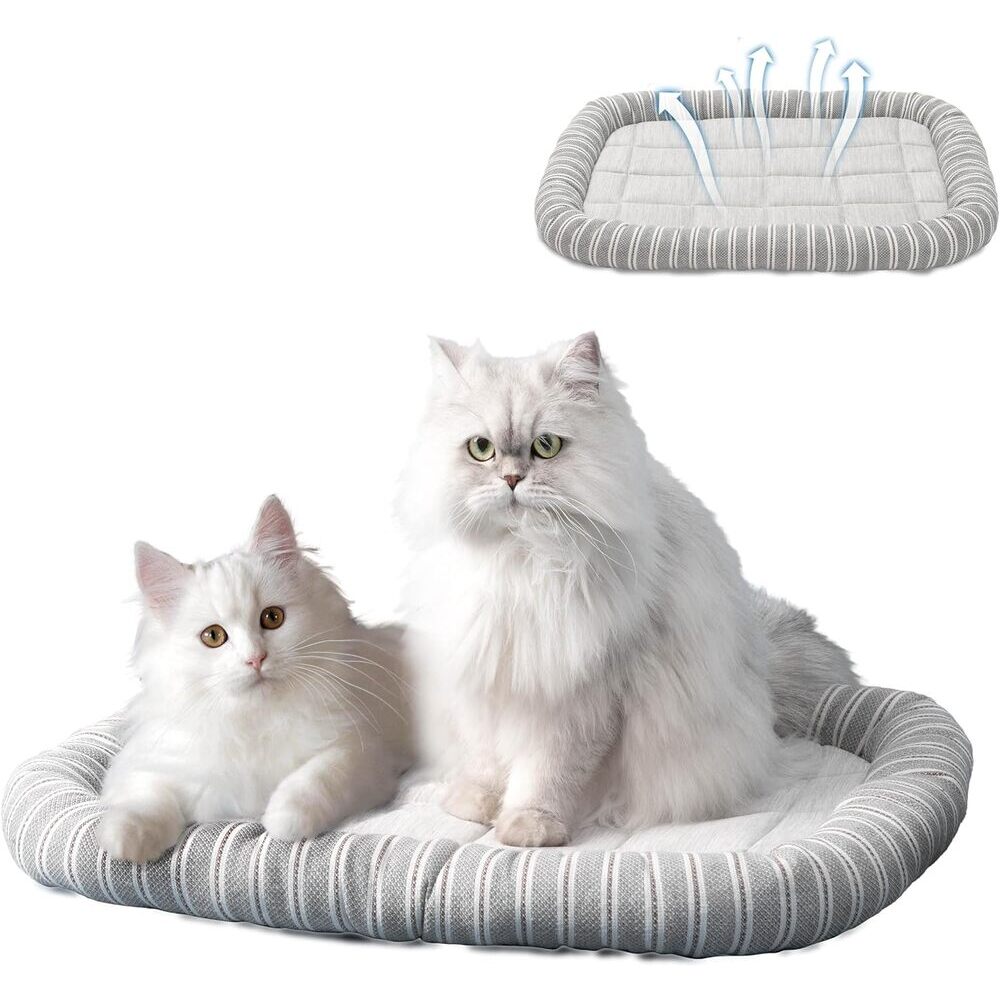
Yes, self-warming cat beds work by reflecting some of your cat’s natural body heat back toward its body. They provide gentle warmth without electricity, batteries, or external heat. However, their performance depends on the bed’s materials, room temperature, and your cat’s needs. They offer extra comfort but cannot replace a heated space or veterinary care when a cat is dangerously cold.
For cat owners across the United States, keeping pets comfortable during winter can mean adding a warm place to rest. Homes in states such as Minnesota, Wisconsin, Colorado, and New York can experience cold winter nights. Even indoor cats may seek extra warmth when temperatures drop. A self-warming cat bed can help meet this need without adding another electrical device to the home.
Unlike an electric pet bed, a self-warming bed does not create heat. It uses layers of insulating material and a reflective inner surface to reduce heat loss. Your cat’s body warms the space between its body and the bed, while the inner layer reflects some of that warmth back. This creates a cozy resting area that can feel warmer than a thin blanket or an ordinary flat mat.
Still, not every self-heating cat bed performs equally well. A thin mat may offer less insulation than a thick, padded bed. A bed placed on a cold floor may also provide less comfort than one placed on a raised or insulated surface. Understanding how these beds work can help you decide whether one is worth buying for your cat.
Source: petsupplieschina.com
How Do Self-Warming Cat Beds Work?
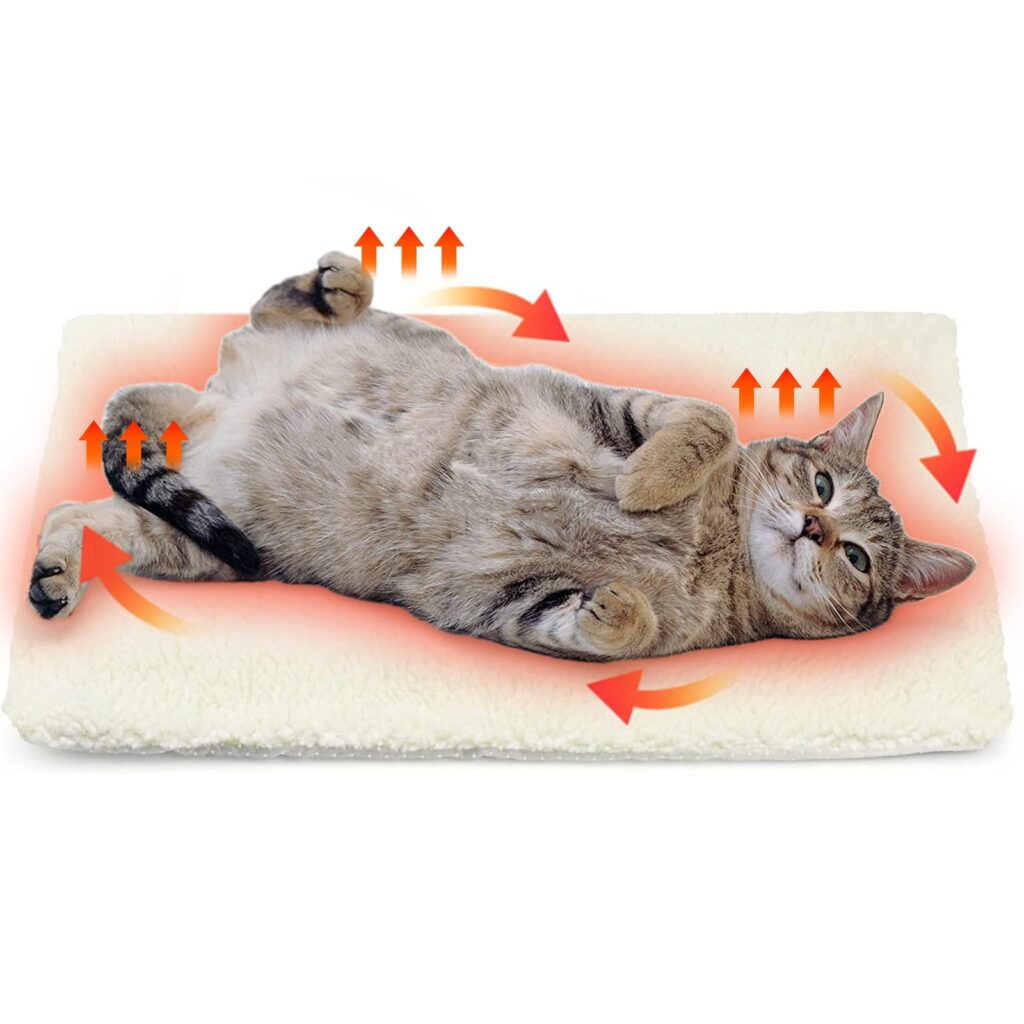
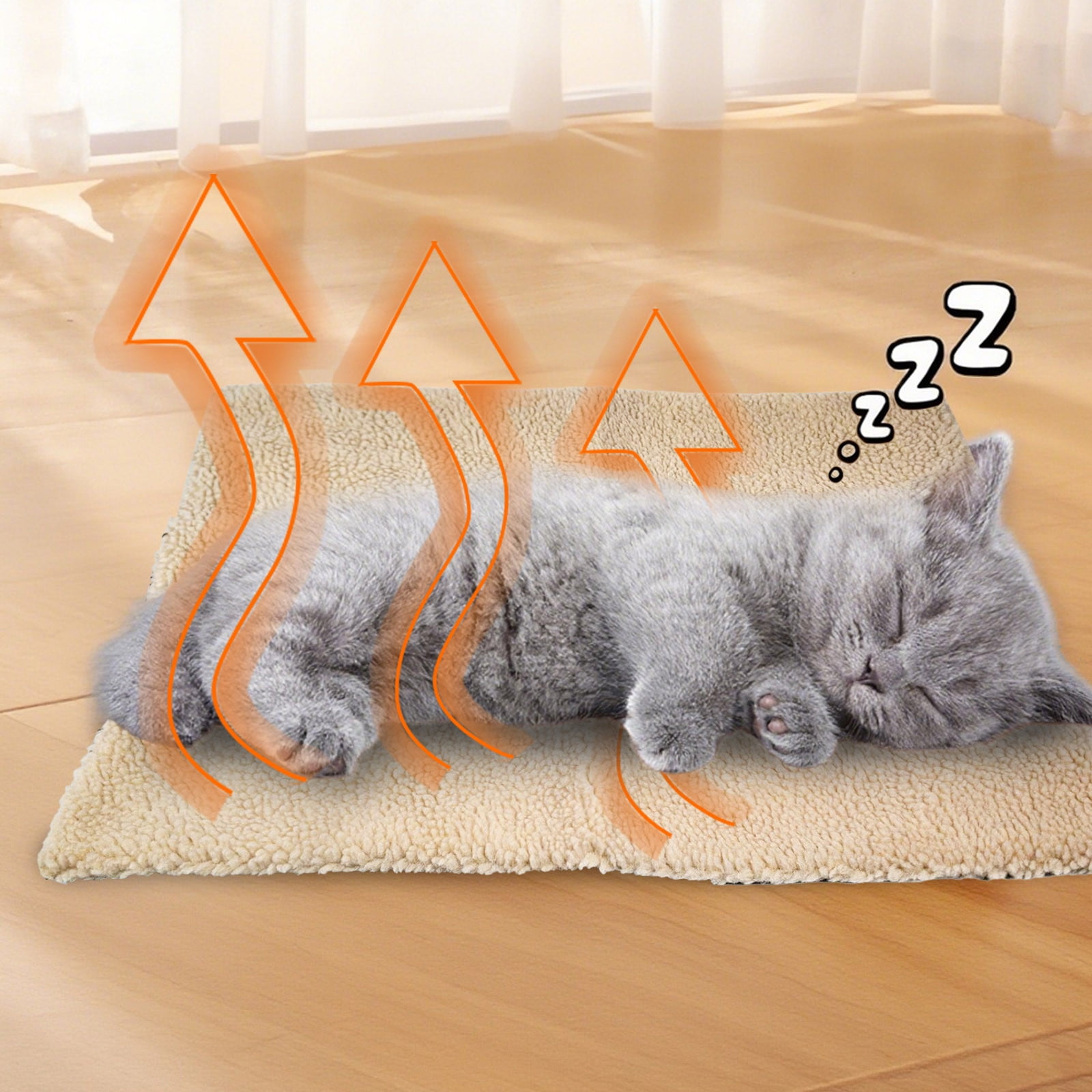
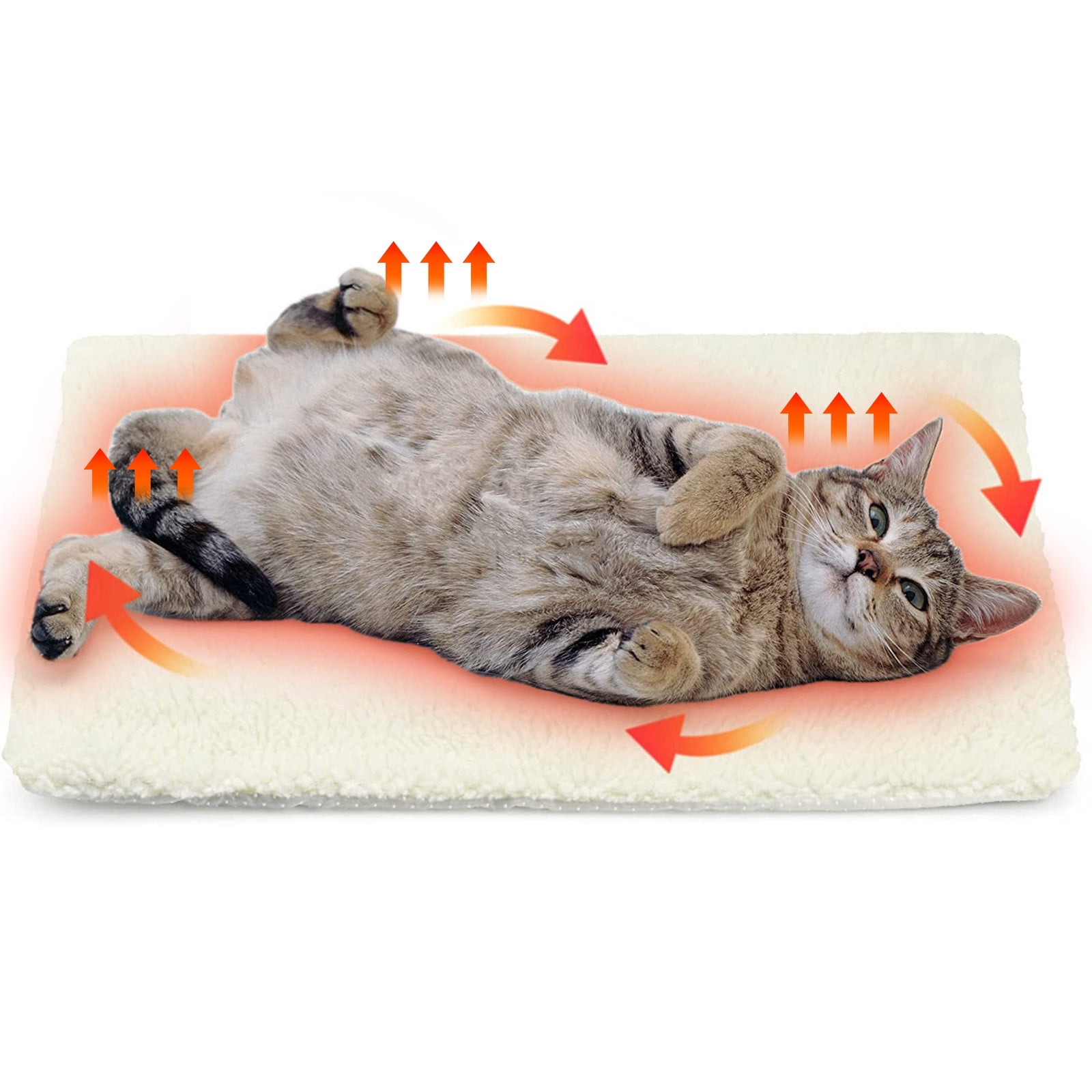
Self-warming cat beds work through a simple process called thermal reflection. Your cat naturally releases body heat while resting. Instead of allowing all that warmth to escape through the bottom of the bed, the bed’s inner material helps reflect some of it toward the cat. Insulating layers also slow the movement of heat away from the resting surface.
Most designs combine a soft outer fabric, a layer of insulation, and a thin reflective material. Some use a material similar to the reflective lining found in thermal blankets. Others use special foam or insulating fabric. The exact construction varies by manufacturer, so the label and product description matter.
The process does not require a power source. Your cat supplies the warmth, while the bed helps retain it. Think of it as wearing a warm coat rather than standing next to a heater. The coat does not create heat, but it helps your body hold on to more of the warmth it already produces.
The result is usually a warmer resting surface than a thin, uninsulated mat. However, the amount of warmth depends on several factors. A bed with poor insulation, damaged lining, or a very thin base may offer limited benefits.
Source: i5.walmartimages.com
Body heat
Your cat releases heat naturally while resting. The bed uses this existing warmth as its heat source.
Reflective lining
The inner layer reflects some heat toward the cat instead of allowing all of it to escape.
Insulating material
Foam, fleece, and other insulating layers slow heat loss and create a more comfortable sleeping surface.
No electricity
The bed works without a plug, power cord, battery, or charging system.
What Makes the Reflective Layer Effective?
The reflective layer is a key part of many self-warming designs. It helps return some of the heat released by your cat instead of letting it pass through the bed. The soft layers around it also help trap a pocket of warm air near the body.
A reflective layer alone is not enough to make a bed effective. The overall construction matters. A thin reflective sheet without enough insulation may offer less comfort than a well-padded bed with several useful layers.
Manufacturers use different materials and designs. Some beds also include a crinkly inner layer that makes a sound when a cat moves. This is a design feature rather than proof of better heating performance.
Layer quality
Look for a securely enclosed reflective layer that does not bunch up or shift during normal use.
Insulation depth
A supportive, insulated base can help reduce heat loss toward cold floors.
Fabric comfort
Soft, breathable fabric can make the bed more inviting for regular naps.
Do Self-Warming Beds Need Sunlight?
No. A self-warming cat bed does not need direct sunlight to function. Its main heat source is your cat’s own body, not solar energy. This means it can work in a shaded room, a bedroom, or another suitable indoor location.
Sunlight can make a resting area warmer, but it is not required. In fact, a cat should always be able to move away from a sunny spot if it becomes too warm.
Are Self-Warming Cat Beds Actually Effective?
Yes, self-warming cat beds can be effective for everyday comfort, especially when a cat rests in a cool room. Their main benefit is reducing heat loss from the body during sleep. This can make a resting spot feel warmer without requiring an electric heating device.
However, effectiveness should not be confused with a measured increase in body temperature. A self-warming bed is designed to improve the comfort of the sleeping surface. It is not a medical heating device, and its performance should not be judged by claims that it can treat cold-related illness.
The difference is easy to understand. A cat resting on a thin mat may lose more body heat through contact with a cold floor. A well-insulated thermal bed can reduce that heat loss. This may help the cat feel more comfortable, but it does not guarantee that every cat will notice or enjoy the difference.
There is limited independent comparative evidence establishing one universal temperature increase or a standard performance level for all self-warming cat beds. Therefore, claims about exact degrees of warmth should be treated carefully unless the manufacturer provides reliable test conditions and measurements.
Source: m.media-amazon.com
Best performance conditions
A cool but suitable indoor room, a dry bed, good insulation, and a cat that enjoys resting on the material can support useful performance.
Limited performance conditions
Very cold surroundings, a damp bed, thin construction, or direct contact with a cold surface can reduce comfort.
Realistic expectation
Expect gentle retained warmth rather than the strong, adjustable heat produced by an electric heating pad.
How Long Does a Self-Warming Cat Bed Take to Work?
A self-warming bed begins retaining body heat as soon as your cat lies on it. There is no warm-up period like the one found with an electric heater. However, the resting area may feel more noticeably cozy after your cat has remained in one position for a short time.
The exact time varies with the bed’s construction, the room temperature, and the cat’s size. A thick bed may retain warmth more effectively than a thin mat. There is no reliable universal number of minutes that applies to every model.
Immediate use
Your cat can use the bed as soon as it is placed in a suitable location.
No charging
The bed does not need to be plugged in or prepared with an external heat source.
Can a Self-Warming Bed Keep a Cat Warm All Night?
It can help a cat stay comfortable during a normal night of sleep if the room is not excessively cold and the bed has suitable insulation. The bed continues to retain some of the cat’s body heat while the cat rests on it.
However, the bed cannot maintain warmth independently when the cat leaves. It also cannot compensate for a dangerously cold room, wet fur, illness, or prolonged exposure to freezing conditions. Keep the sleeping area dry and provide access to a warmer indoor space.
What Are the Benefits of Self-Warming Cat Beds?
The main benefit of a self-warming cat bed is that it provides extra insulation without electricity. It gives cats a dedicated resting area that can help them retain natural body warmth. For owners who want a simple winter comfort option, this can be a practical feature.
These beds can also be convenient for households that prefer fewer electrical devices. There is no heating cord to position around furniture and no battery to recharge. Owners still need to inspect the bed for wear, clean it as directed, and keep it in a suitable location.
Another advantage is flexibility. Many designs are lightweight and easy to move between rooms. Some flat thermal mats fit inside a carrier, on a sofa, or in a cat’s favorite sleeping corner, provided the product dimensions and care instructions allow that use.
Source: catglamour.com
Energy-free operation
The bed does not use electricity, so it adds no power consumption to your household.
Simple setup
Most models are ready to use after unpacking and placing them on a suitable surface.
Portable design
Lightweight mats can be moved to different resting areas when needed.
Gentle insulation
The bed helps reduce heat loss without producing an active heating effect.
Useful for multiple settings
Depending on the design, a thermal bed may fit a bedroom, living room, carrier, or protected outdoor shelter.
Why Are They Useful During Winter?
During winter in the United States, indoor temperatures can vary from room to room. A basement, enclosed porch, or drafty corner may feel colder than the main living area. A self-warming bed can give a cat a more insulated place to rest in these conditions.
The bed is especially useful when a cat prefers a particular sleeping location that feels slightly chilly. Instead of forcing the cat to move, an owner can improve the comfort of that resting area with a thermal mat or insulated bed.
Still, the bed should be only one part of winter care. Cats that go outdoors need suitable shelter from wind, rain, and snow. A thermal bed alone does not make an exposed outdoor location safe.
Can Self-Warming Beds Help Senior Cats?
Older cats may appreciate a warm, soft, and supportive place to rest. Some senior cats have arthritis or reduced mobility, and cold conditions may make movement less comfortable. A well-padded bed can provide a more pleasant resting area.
Choose a bed with a low entrance if your cat has trouble stepping over raised edges. A flat, cushioned thermal mat may be easier to access than a deep donut bed. The surface should also support the cat without forcing it to climb or jump.
Warm bedding does not treat arthritis or joint disease. If your senior cat becomes reluctant to jump, moves stiffly, or changes its normal habits, arrange a veterinary check rather than assuming that the problem is simply cold weather.
Low entry
Choose an easy-access design for cats with stiff joints or reduced mobility.
Supportive padding
Look for a comfortable base that does not flatten completely under the cat’s weight.
Easy cleaning
A removable, washable cover can make routine care easier.
Which Cats Benefit Most From Self-Warming Beds?
Self-warming cat beds may be useful for cats that often seek warm sleeping places or live in cooler indoor environments. Some cats naturally curl up under blankets, sleep near sunny windows, or choose insulated corners. A thermal bed can provide another comfortable option.
However, individual preferences matter more than age or breed alone. One cat may love a reflective thermal mat, while another may prefer a regular fleece blanket. The best way to judge whether a bed suits your cat is to offer it in a familiar resting area and observe how the cat responds.
Cats that are very young, elderly, hairless, underweight, or unwell may need closer attention in cold conditions. These cats can be more vulnerable to temperature changes. A self-warming bed may add comfort, but owners should ask a veterinarian whether additional temperature support is needed.
Source: welovecatsandkittens.com
Senior cats
Older cats may enjoy a warm, padded surface, especially if cold conditions make resting less comfortable.
Short-haired cats
Cats with less insulating fur may appreciate an extra layer during cool weather.
Hairless cats
Hairless breeds may need more help staying comfortable because they lack the insulating coat found in other cats.
Indoor cats
Cats that spend most of their time indoors may benefit when certain rooms or floors feel cold.
Cats that enjoy enclosed beds
A thermal bed with raised sides may appeal to cats that like curling up in a sheltered space.
Are Self-Warming Beds Good for Kittens?
A self-warming bed may provide a comfortable resting surface for an older kitten that can move around independently. Its soft padding and insulation can help create a cozy sleeping spot. However, very young kittens have less developed temperature regulation and may need more careful environmental support.
Do not rely on a self-warming mat as the only heat source for a newborn or very young kitten. Kittens that cannot regulate their body temperature properly may need a controlled warming setup under veterinary or experienced neonatal-care guidance.
Always make sure kittens can move away from warmth when appropriate. Choose a bed without loose strings, detachable parts, or materials that could become chewing or swallowing hazards.
Are They Suitable for Hairless Cats?
Hairless cats, including Sphynx cats, may benefit from a self-warming bed because they have little or no fur to help insulate their bodies. A soft thermal surface can provide additional comfort during cooler periods.
However, the bed should not be treated as a substitute for a warm indoor environment. Hairless cats may need several comfortable resting options throughout the home. Monitor their comfort and speak with a veterinarian if they seem persistently cold or show unusual behavior.
Can Sick or Recovering Cats Use Them?
A self-warming bed may offer a comfortable resting surface for a cat recovering at home, but its suitability depends on the illness and the cat’s condition. Some recovering cats need closer temperature monitoring or a specific warming method recommended by a veterinarian.
Do not use a thermal bed as treatment for weakness, shivering, low body temperature, or other signs of illness. A sick cat may need medical care even if it appears to enjoy a warm resting place.
Self-Warming Cat Beds vs. Electric Heated Cat Beds
Self-warming and electric heated cat beds serve a similar purpose, but they use different methods. A self-warming bed retains some of the cat’s natural body heat. An electric bed uses a power source to generate warmth.
The right choice depends on your cat’s needs, the room temperature, and how much temperature support is required. A self-warming mat is often simpler and easier to move. An electric model may provide more consistent warmth when used correctly, but it introduces additional safety considerations.
Neither type should be used as a substitute for veterinary treatment when a cat has signs of hypothermia. The difference is mainly about everyday comfort, not medical care.
Source: petbedsupply.com
Self-warming bed
Uses insulation and reflective material to retain body heat. It requires no electricity and produces no active heat.
Electric heated bed
Uses electricity to provide warmth. It may offer a more consistent heat source but requires careful attention to product instructions, cords, and overheating risks.
Ordinary cat bed
Provides cushioning and a comfortable resting surface. Its warmth depends mainly on the fabric, thickness, and insulation.
Which Option Is Safer?
A self-warming bed avoids electrical risks because it has no power cord or heating element. This makes it a simple option for owners who want extra insulation without adding another powered device.
An electric bed is not automatically unsafe. A properly designed pet heating product, used according to its instructions, may provide useful warmth. However, damaged cords, chewing, incorrect use, and direct exposure to excessive heat can create hazards.
Veterinary guidance warns that heating devices must be used carefully because excessive surface heat can burn animals. Cats with reduced mobility or impaired sensation may be less able to move away from an uncomfortable heat source.
For simple everyday comfort
A self-warming bed is a reasonable starting point when a cat simply needs a more insulated sleeping area.
For additional controlled warmth
Consider a suitable pet-specific heated product only after checking its safety instructions and discussing special medical needs with a veterinarian.
Can You Use Both Types Together?
You can provide separate resting options, such as a self-warming bed in one area and a suitable heated bed in another. This gives your cat a choice based on its comfort.
However, do not stack an ordinary thermal bed over an electric heating pad unless both manufacturers specifically approve that arrangement. Extra layers can interfere with heat dissipation and may create overheating risks.
Keep each product in the arrangement approved by its manufacturer. Never modify electrical heating equipment or cover ventilation openings.
How to Choose the Best Self-Warming Cat Bed
Choosing a good self-warming cat bed requires more than checking whether the product uses a reflective layer. The size, padding, fabric, construction, and cleaning method all affect its everyday usefulness.
Start with your cat’s sleeping habits. A cat that stretches out may need a wide, flat mat, while one that curls into a ball may prefer a round bed with raised sides. A senior cat with limited mobility may find a low-profile design easier to enter.
Next, examine the materials and construction. Look for a securely enclosed thermal layer, durable stitching, and a comfortable surface. The product description should explain how the bed works and provide clear washing instructions.
Avoid choosing a bed based only on marketing claims such as extra warm or maximum heat. Unless the manufacturer provides meaningful test data, these phrases do not establish how much warmer the product will feel in your home.
Source: i5.walmartimages.com
Correct size
Measure your cat while resting and choose enough space for its preferred sleeping position.
Comfortable padding
Select a base that offers enough cushioning and does not flatten too easily.
Secure construction
Check seams, lining, and edges for loose parts or exposed material.
Washable cover
A removable cover can make cleaning easier, but follow the manufacturer’s instructions.
Stable base
A non-slip bottom can help keep the bed in place on smooth indoor floors.
Round Bed or Flat Thermal Mat: Which Is Better?
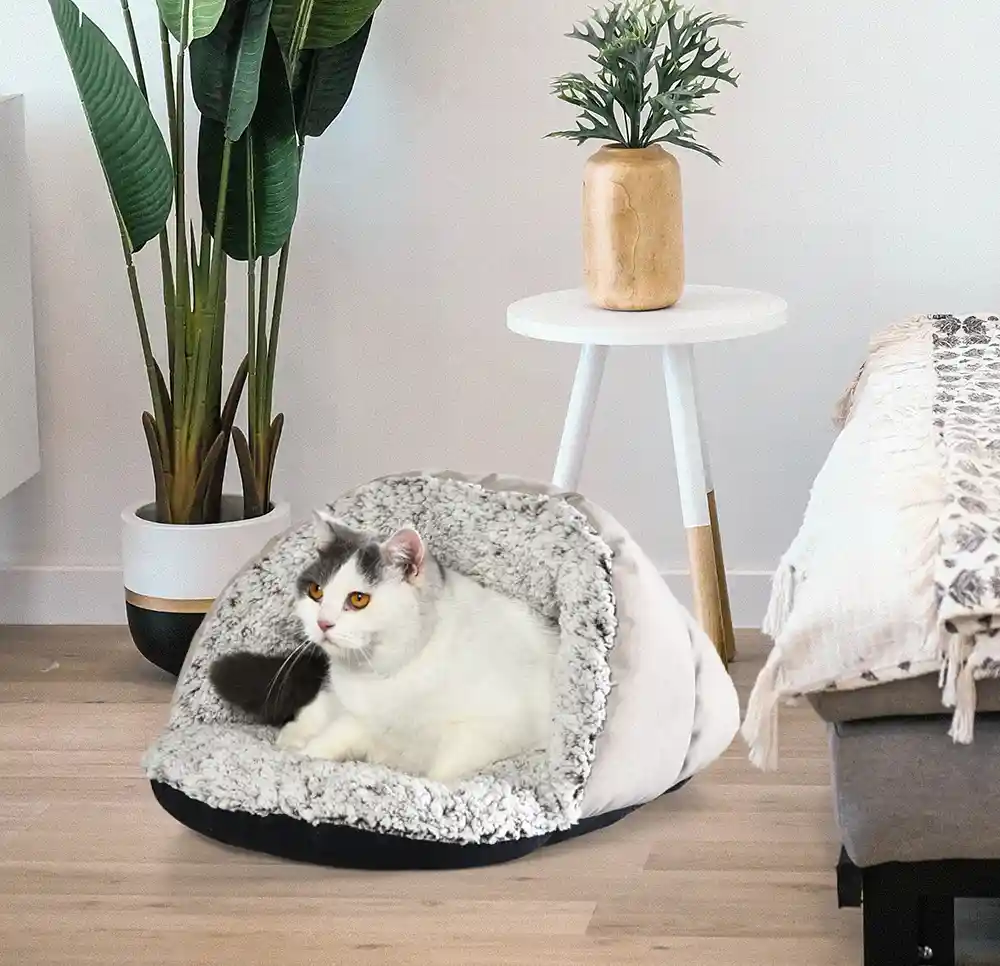
A round self-warming bed is often a better fit for cats that like to curl up. Its raised sides can create a sheltered feeling and provide a place to rest the head. The enclosed shape may also help retain warmth around a curled-up cat.
A flat thermal mat is useful for cats that stretch out or prefer sleeping on a sofa, chair, or carrier surface. It is also easier to move between locations and may take up less storage space.
Neither shape is automatically more effective. Choose according to your cat’s normal sleeping position and the amount of support it needs.
Round bed
Suitable for cats that curl up and enjoy raised sides or a more enclosed sleeping area.
Flat mat
Suitable for cats that stretch out or prefer a low, open resting surface.
Bolster bed
Offers raised edges for cats that like resting their head against a soft side.
What Materials Should You Look For?
Fleece and plush fabrics can provide a soft surface, while foam or other insulating materials can add cushioning. Some beds use reflective film between fabric layers. A combination of comfortable fabric and a well-built base is often more useful than a thin reflective sheet by itself.
Check whether the inner layer is fully enclosed. If the reflective material becomes exposed, damaged, or torn, the bed may no longer be suitable for use. Replace a damaged product rather than trying to repair an internal thermal layer with household tape.
Also consider the cleaning requirements. Some beds have removable covers, while others must be washed as a complete item. A product that cannot be cleaned in a way that suits your household may become difficult to maintain.
Where Should You Place a Self-Warming Cat Bed?
The best place for a self-warming cat bed is a dry, quiet, and comfortable area where your cat already enjoys resting. Placement matters because even a well-insulated bed cannot fully protect a cat from cold drafts, damp floors, or unsuitable room conditions.
Start by observing where your cat sleeps during the day. If it often chooses a sofa, bedroom corner, or quiet spot near a window, place the bed nearby. Familiar surroundings can make a new sleeping surface more appealing.
Avoid placing the bed directly beside an open door, a drafty window, or an area exposed to moisture. A cold tile or concrete floor can also reduce overall comfort, so placing the bed on a dry, insulated surface may help.
Source: catglamour.com
Quiet bedroom corner
A peaceful location can help your cat rest without frequent disturbances.
Living room
A familiar family area may encourage a social cat to use the new bed.
Raised indoor surface
A suitable platform or furniture surface can reduce direct contact with a cold floor, provided the cat can access it safely.
Protected shelter
A suitable thermal mat may be used in a dry, protected shelter if the product is designed for that environment.
Can You Put a Self-Warming Cat Bed on a Cold Floor?
Yes, but the floor beneath the bed can affect comfort. Tile, concrete, and other cold surfaces may draw warmth away from the underside of a thin mat. A bed with a thick insulated base may reduce this effect.
If the bed feels too thin, place it on a stable, dry, insulated surface that does not create a slipping or tipping risk. Avoid using damp blankets or materials that can trap moisture beneath the bed.
Check the arrangement after your cat starts using it. The bed should remain flat and stable, with no sharp edges or loose layers.
Are Self-Warming Cat Beds Suitable for Outdoor Cats?
Some self-warming mats are marketed for indoor and outdoor use, but that claim should not be interpreted as permission to leave any thermal bed exposed to the weather. Outdoor conditions introduce moisture, wind, freezing temperatures, and rapid temperature changes.
For outdoor cats in the United States, a dry, insulated, weather-protected shelter is more important than the bed alone. Cornell University’s feline health guidance recommends protection from wind and precipitation, suitable bedding, and raising shelters off the ground when possible.
A self-warming mat can be an additional layer inside a suitable shelter if its manufacturer permits outdoor use. Check it regularly for dampness, damage, dirt, and signs of wear. Replace it if it becomes wet or cannot be cleaned properly.
Weather protection
Use a shelter that blocks wind and precipitation rather than relying on the thermal mat alone.
Dry bedding
Check regularly for moisture, as wet bedding can increase heat loss.
Ground insulation
Keep the shelter raised off cold or wet ground when possible.
Common Reasons a Self-Warming Cat Bed May Not Work Well
A self-warming bed may disappoint when its construction, placement, or design does not match the cat’s needs. The product may still function as intended, but the cat may not feel enough difference to choose it over a familiar blanket or sofa.
Before replacing the bed, check how it is being used. A bed placed in a noisy area may be ignored even if its insulation is good. Similarly, a cat that prefers flat sleeping surfaces may avoid a deep enclosed design.
The most useful troubleshooting approach is to check the bed, the location, and the cat’s preferences separately. This helps identify whether the problem is poor construction or simply an unsuitable sleeping arrangement.
Source: m.media-amazon.com
Insufficient insulation
A thin base may provide limited protection from heat loss through the floor.
Wrong bed size
A small bed may restrict movement, while an excessively large design may not suit a cat that prefers enclosed spaces.
Uncomfortable fabric
Some cats dislike crinkly reflective materials or certain fabric textures.
Poor placement
Noise, drafts, and frequent activity can make a resting location unattractive.
Unrealistic expectations
A self-warming bed cannot produce the same heat as an electric heating device.
Why Does My Cat Refuse to Use a Self-Warming Bed?
Cats can be selective about their sleeping surfaces. A new bed may smell unfamiliar, feel different under their paws, or be located somewhere they do not feel secure. Refusing the bed does not necessarily mean that its thermal design is ineffective.
Place the bed near a familiar sleeping spot and allow your cat to explore it naturally. You can add a clean blanket that already carries a familiar household scent, provided it does not cover or interfere with any special product features.
Avoid forcing your cat to stay on the bed. Give it time and keep an alternative resting place available. If your cat continues to avoid it, a different shape or fabric may be a better choice.
Keep it familiar
Place the new bed close to a location your cat already uses.
Check the texture
Try a softer or quieter design if your cat dislikes the reflective layer’s feel or sound.
Allow a choice
Keep another comfortable sleeping option available.
Why Does the Bed Feel Cold?
A self-warming bed can feel cool before a cat uses it because it does not generate heat on its own. The warmth comes from the cat’s body, so an empty bed should not be expected to feel like an electric heating pad.
If the bed still provides little comfort after regular use, inspect its base, lining, and placement. A damaged reflective layer, insufficient padding, or direct contact with a very cold surface may affect performance.
Do not attempt to warm the bed using an unapproved electric pad, hot water, or another external heat source. Follow the manufacturer’s care and use instructions.
When Should You Replace a Self-Warming Cat Bed?
Replace the bed when its base becomes badly compressed, its seams open, the inner reflective material becomes exposed, or the fabric cannot be cleaned safely. Persistent odors, mold, and moisture damage are also reasons to stop using it.
There is no universal replacement schedule for every self-warming cat bed. Product quality, cleaning frequency, and daily use all affect its lifespan. Inspect the bed regularly instead of replacing it based only on age.
Are Self-Warming Cat Beds Safe?
Self-warming cat beds are generally a simple, low-risk option for everyday comfort when they are well made, used as directed, and kept in good condition. Because they do not have electrical heating elements, they avoid risks associated with power cords and active heating components.
However, no pet bed is completely free from potential hazards. Loose fabric, exposed filling, damaged seams, small detachable parts, and chewing damage can create problems. A cat that chews bedding may also swallow pieces of fabric or insulation.
Check the product before use and inspect it regularly. Stop using it if the reflective lining becomes exposed, the base breaks apart, or the cat begins pulling out and eating the filling.
Most importantly, do not confuse everyday warmth with treatment for hypothermia. A cat that is extremely cold, weak, unusually sleepy, unresponsive, or breathing abnormally needs urgent veterinary attention. A self-warming bed cannot correct a dangerous drop in body temperature.
Source: petsupplieschina.com
Inspect the seams
Look for loose threads, holes, torn fabric, and exposed internal material.
Prevent chewing hazards
Remove damaged bedding if your cat chews or pulls apart the material.
Keep the bed dry
Moisture can reduce comfort and create hygiene problems.
Follow cleaning instructions
Use only the cleaning method approved by the manufacturer.
Can a Self-Warming Bed Cause Overheating?
A normal self-warming bed does not actively produce heat. It mainly retains some of the warmth your cat releases, so its operation differs from an electric heater. This makes excessive heat generation less of a concern than with powered warming products.
Nevertheless, cats should always have the freedom to leave a bed and choose another resting place. Avoid placing bedding in direct, intense sunlight or next to a strong heat source if the area becomes uncomfortably warm.
If your cat pants, drools, becomes weak, or shows signs of heat stress, move it to a cooler area and contact a veterinarian promptly.
What Are the Signs That a Cat Is Too Cold?
A cat that feels cold may curl into a tight ball, seek blankets, or spend more time in warm locations. Shivering, reduced activity, and cold extremities can also indicate that the cat is uncomfortable.
More serious signs include weakness, difficulty walking, pale gums, slow or shallow breathing, collapse, and reduced responsiveness. These signs can indicate hypothermia or another serious medical problem.
Veterinary sources identify hypothermia as a condition that requires medical attention. Move the cat to a warm indoor area, wrap it in a dry blanket, and seek veterinary advice immediately if you suspect hypothermia. Do not apply excessive direct heat or wait for a self-warming bed to solve the problem.
Mild warning signs
Shivering, tightly curling up, and repeatedly seeking warm places deserve attention, especially in vulnerable cats.
Emergency warning signs
Severe weakness, poor coordination, slow breathing, collapse, or unresponsiveness require urgent veterinary care.
Frequently Asked Questions
Q
Do Self-Warming Cat Beds Really Keep Cats Warm?
Yes. Self-warming cat beds help cats retain some of their natural body heat through reflective and insulating materials. They can make a resting surface feel warmer than an ordinary thin mat, especially in a cool indoor room. However, they do not generate heat and cannot replace a properly heated environment when temperatures become dangerously low.
Q
Do Self-Warming Cat Beds Work Without Electricity?
Yes. These beds work without electricity, batteries, or charging. They use the cat’s natural body heat as their heat source. Insulating materials slow heat loss, while a reflective inner layer helps return some warmth toward the cat. This is why they are often described as energy-free or non-electric cat beds.
Q
Are Self-Warming Cat Beds Better Than Electric Heated Beds?
Neither option is automatically better for every cat. Self-warming beds are simpler, portable, and do not require electricity. Electric heated beds can provide more consistent active warmth but require careful use because of electrical and burn risks. For ordinary comfort in a cool room, a self-warming bed may be sufficient. Cats with special medical needs should have a warming plan recommended by a veterinarian.
Q
Can I Wash a Self-Warming Cat Bed?
It depends on the product. Some self-warming beds have removable, machine-washable covers, while others require spot cleaning or a specific washing method. Always read the manufacturer’s care instructions before washing. Incorrect washing can damage the reflective lining, insulation, or stitching and reduce the bed’s usefulness.
Q
Are Self-Warming Cat Beds Good for Outdoor Cats?
They can provide additional insulation inside a suitable outdoor shelter if the manufacturer allows outdoor use. However, the bed itself does not protect a cat from rain, snow, wind, or freezing temperatures. Outdoor cats need a dry, weather-protected shelter with suitable bedding and access to food and unfrozen water. Check the mat frequently and replace it if it becomes wet or damaged.
Q
Do Self-Warming Cat Beds Work for Older Cats?
Yes, many older cats may appreciate the extra insulation and soft padding. A low-entry bed with a supportive base can be especially useful for a senior cat that has difficulty stepping over raised edges. However, warmth does not treat arthritis or other age-related conditions. Ask your veterinarian about new stiffness, reduced mobility, or changes in sleeping habits.
Q
Why Is My Self-Warming Cat Bed Not Getting Warm?
A self-warming bed is not supposed to feel warm when empty because it does not produce heat. It relies on your cat’s body to create warmth within the resting area. If it provides little comfort during use, check the insulation, reflective lining, bed thickness, and placement. Also consider whether your cat prefers another fabric or bed shape.
Q
Can I Put a Blanket Over a Self-Warming Cat Bed?
A light blanket may be suitable if the manufacturer permits it and your cat enjoys the extra layer. However, a thick blanket could interfere with the intended contact between the cat and the thermal surface. Avoid covering or modifying the bed in a way that damages its construction. Make sure your cat can move freely and leave the sleeping area whenever it wants.
Q
How Long Do Self-Warming Cat Beds Last?
Their lifespan depends on material quality, construction, cleaning, and daily use. There is no standard replacement period that applies to every model. Inspect the seams, base, and inner lining regularly. Replace the bed if it becomes badly compressed, develops tears, exposes internal materials, or cannot be cleaned properly.
Q
Can a Self-Warming Cat Bed Prevent Hypothermia?
No. A self-warming bed may improve everyday comfort, but it is not designed to prevent or treat hypothermia in dangerous conditions. Hypothermia is a medical emergency that can cause weakness, abnormal breathing, and collapse. If your cat shows signs of serious cold exposure, move it to a warm indoor area and seek immediate veterinary care.
✦ Wrapping Up
Conclusion
So, do self warming cat beds work? Yes, they can. Their reflective and insulating layers help cats retain some of their natural body heat, making the sleeping surface more comfortable without electricity. They are a practical option for indoor cats that enjoy warm resting spots, particularly during cooler months.
However, their benefits have limits. They do not generate heat, cannot replace a suitable indoor temperature, and should never be used as treatment for hypothermia. The quality of the materials, the thickness of the base, the room temperature, and your cat’s personal preferences all affect how useful the bed will be.
When choosing one, focus on comfortable padding, suitable dimensions, secure construction, and easy cleaning. Place it in a quiet, dry location where your cat already enjoys resting. Give your cat time to explore the new bed and keep another comfortable sleeping option available.
For most healthy cats that simply need a warmer place to nap, a well-made self-warming bed is a sensible addition to their sleeping area. For kittens, senior cats, hairless breeds, and cats with health problems, consider their individual temperature needs and ask a veterinarian when additional support may be necessary.
💡 Key Takeaway
Choose a well-insulated, correctly sized self-warming cat bed with a secure reflective layer and easy-care fabric. Place it in a quiet, dry area, observe whether your cat uses it, and inspect it regularly. Remember that a thermal bed provides comfort, not medical heat treatment.