

The right medicated cat shampoo can calm itch fast and safely.
You notice your cat scratching more than usual. Maybe there are red patches, a greasy coat, or a musty smell that lingers. You want relief that actually works and is safe for cats. That is where a medicated shampoo can help. The right formula breaks the itch–scratch cycle, tackles yeast or bacteria, and soothes skin. In this Medicated Cat Shampoo Review, I explain which products stand out, why they work, and how to use them for the best results.
Vet Formula Antiseptic & Antifungal Shampoo, 16 oz

This is my first go-to when I see greasy, scaly skin or that telltale yeasty odor. It is made for cats and dogs and uses a soap-free base. That means it plays nice with flea and tick treatments. The formula targets common bacteria and yeast that flare with moisture, allergies, or stress.
I notice better coat feel after the second bath. The lather is rich but not harsh, and it rinses clean. Cats with red patches on the belly, chin, or between the toes often calm down fast. For best results, leave the lather on for at least 5 to 10 minutes before rinsing.
Pros:
- Targets both yeast and bacteria for broad skin support
- Soap-free base that is gentle on cat skin
- Helps reduce odor and greasy buildup
- Rinses clean to avoid residue and matting
- Works with most topical flea treatments
- Good value for clinical-level results
Cons:
- Needs contact time; quick baths may not be enough
- Some cats dislike the scent during use
- May dry very sensitive skin if overused
My Recommendation
If your cat has greasy skin, musty odor, or flaky patches, start here. In my Medicated Cat Shampoo Review, this formula earns a top spot for mixed infections. It balances cleansing with skin comfort. It is a good first step before moving to stronger prescription options.
I suggest one to three baths per week for the first two weeks. Then taper to once weekly or as your vet directs. Always test a small spot first. Keep baths short, warm, and calm.
| Best for | Why |
|---|---|
| Greasy, yeasty coat | Targets yeast and bacteria while staying gentle |
| Red, itchy belly or chin | Helps calm hot areas and reduces odor |
| Multi-pet households | Safe for cats and dogs and easy to share |
Vet Formula Hot Spot & Itch Relief Shampoo, 16 oz

This one shines when the main issue is itch. It uses soothing agents often paired with anti-itch actives. That gives fast relief for hot spots, over-groomed areas, and raw skin. Cats who lick the same patch over and over often relax after a bath with this.
The lather is mild, and I like it for sensitive skin days. It will not fight yeast like an antifungal would. But when the skin is angry, sometimes you must dial down the itch first. Then you can rotate in a stronger antimicrobial later.
Pros:
- Fast-acting itch relief for hot spots and raw skin
- Gentle on stressed or thin skin
- Pairs well with antimicrobial shampoos in a routine
- Helps curb licking and scratching cycles
- Good choice for seasonal flares
Cons:
- Not ideal for yeast or heavy odor alone
- May need rotation with an antifungal/antibacterial
- Contact time still matters for effect
My Recommendation
If your cat is tearing up one spot from itch, use this. In my Medicated Cat Shampoo Review, it is the calm-down step for inflamed skin. I often use it first to cool the area. Then I move to a yeast/bacteria formula once the skin is less raw.
Keep baths brief and warm. Pat dry to avoid friction. Follow with a bland moisturizer if your vet approves.
| Best for | Why |
|---|---|
| Hot spots and raw patches | Soothes itch fast to break the cycle |
| Sensitive or thin skin | Gentle formula that calms irritation |
| Allergy flare seasons | Easy to add as a soothing rinse routine |
Vet Formula Antiseptic & Antifungal, 2 Pack

If you plan a full treatment cycle, the two-pack makes sense. Skin issues in cats often need weeks, not days. This is the same balanced formula as the single bottle. It helps with greasy scale, red folds, and odor tied to yeast or bacteria.
Buying two up front avoids running out mid-plan. It also lets you keep one bottle by the tub and one in a travel kit. The cost per ounce improves, which is nice for multi-cat homes. Keep a cap on contact time and rinse well.
Pros:
- Great value for multi-week treatment plans
- Broad action for yeast and bacteria
- Soap-free and made for cats and dogs
- Easy to maintain a steady routine
- Consistent results with regular use
Cons:
- Upfront cost is higher than one bottle
- Storage space needed for the extra bottle
- May over-dry with very frequent use
My Recommendation
Get the two-pack if your vet suggests a 4–8 week plan. In this Medicated Cat Shampoo Review, it is the budget pick for long courses. You will use it enough to justify the extra bottle. It helps to stay consistent, which is key for skin cases.
Pair with cotton pads for hard-to-rinse areas like armpits or the groin. Keep the bottle closed to protect the active ingredients.
| Best for | Why |
|---|---|
| Long treatment plans | Better value across many baths |
| Multiple cats with issues | Enough product to treat more than one pet |
| Greasy, smelly coats | Targets common causes with steady use |
Pet Honesty Chlorhexidine Itch Relief Shampoo, 16 oz
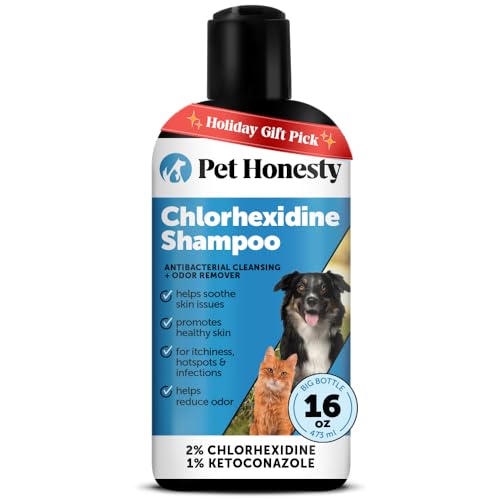
This formula leans on chlorhexidine, a trusted antiseptic used by vets. It is a strong choice for cats with bacterial overgrowth or odor. The lather is rich and helps lift debris from dense coats. It is also a good pick for cats with skin folds or acne on the chin.
Chlorhexidine is time-tested for skin care in pets. The scent is cleaner than many medicated shampoos. I like it as part of a weekly routine in warm months. If yeast is a big factor, try pairing with an antifungal on alternate days.
Pros:
- Chlorhexidine gives broad antibacterial action
- Great for chin acne and oily build-up
- Clean smell without heavy perfume
- Rinses well to reduce residue
- Easy to fit into a weekly routine
Cons:
- May not be enough for yeast-heavy cases
- Can dry delicate skin if used too often
- Some cats dislike the medicinal scent
My Recommendation
If the main issue is bacteria, this is a safe bet. In this Medicated Cat Shampoo Review, Pet Honesty stands out for daily grime and acne care. It is steady, simple, and easy to use. Keep an eye on dry spots and add a conditioner if needed and vet-approved.
Use lukewarm water and gentle massage. Keep the lather on the chin and belly for several minutes. Avoid eyes and inner ears, and rinse very well.
| Best for | Why |
|---|---|
| Chin acne | Chlorhexidine supports surface bacteria control |
| Oily, smelly coats | Helps lift residue and reduce odor |
| Weekly upkeep | Easy to fit into simple care plans |
MiconaHex+Triz Shampoo for Pets, 16 oz

This is a premium, clinic-style shampoo. It combines antifungal and antibacterial agents with TrizEDTA, which helps disrupt biofilm. That can boost how well the actives reach the skin surface. It is a serious option for stubborn cases that keep coming back.
The texture is silky and easier to spread on long coats. I see strong results when yeast and bacteria both play a role. It is more costly, but the performance fits. I suggest it for cats who have failed lighter formulas.
Pros:
- Dual-action against yeast and bacteria
- TrizEDTA supports penetration and debris breakdown
- Great pick for recurrent skin cases
- Good spreadability on long or dense coats
- Clinic-grade results at home
Cons:
- Higher price than basic shampoos
- Some cats may need a gradual intro due to strength
- Requires strict contact time and rinse
My Recommendation
Choose this if other shampoos did not clear the issue. In my Medicated Cat Shampoo Review, MiconaHex+Triz earns the “stubborn cases” award. It offers strong support without a prescription. Always ask your vet if your cat has open sores or is on other meds.
Start with once weekly and watch the skin. Increase to twice weekly if your vet agrees. Keep the coat damp during contact time so it does not dry on the skin.
| Best for | Why |
|---|---|
| Recurrent yeast/bacteria issues | Dual actives plus TrizEDTA support deeper action |
| Long-coat cats | Spreads well and rinses clean |
| Odor with stubborn scale | Targets build-up linked with biofilm |
FAQs Of Medicated Cat Shampoo Review
How often should I bathe my cat with medicated shampoo?
Follow your vet’s plan. A common plan is 2–3 times a week for 2–3 weeks, then once a week. Keep contact time to 5–10 minutes.
Will these shampoos remove flea treatments?
Most listed shampoos are soap-free and should not strip topicals. Check the label and wait 48 hours after spot-on treatments unless your vet advises.
Can I use human dandruff shampoo on my cat?
No. Human shampoos can harm cats. Use pet formulas only. Cats groom and ingest residue, so pet-safe is a must.
What if my cat hates baths?
Use warm water, a non-slip mat, and soft towels. Keep sessions short and calm. You can also use a sponge bath method on small areas.
When should I see a vet instead of only using shampoo?
See a vet for open sores, fever, fast-spreading rash, weight loss, or no relief after 2–3 weeks. Your cat may need tests or prescriptions.
Final Verdict: Which Should You Buy?
For broad issues and value, the Vet Formula Antiseptic & Antifungal is my first pick. For stubborn or recurring cases, MiconaHex+Triz offers clinic-level power.
If itch is the main problem, choose the Hot Spot & Itch Relief first. This Medicated Cat Shampoo Review shows each option has a clear best use.

6 thoughts on “Medicated Cat Shampoo Review: Top Vet-Approved Picks 2026”