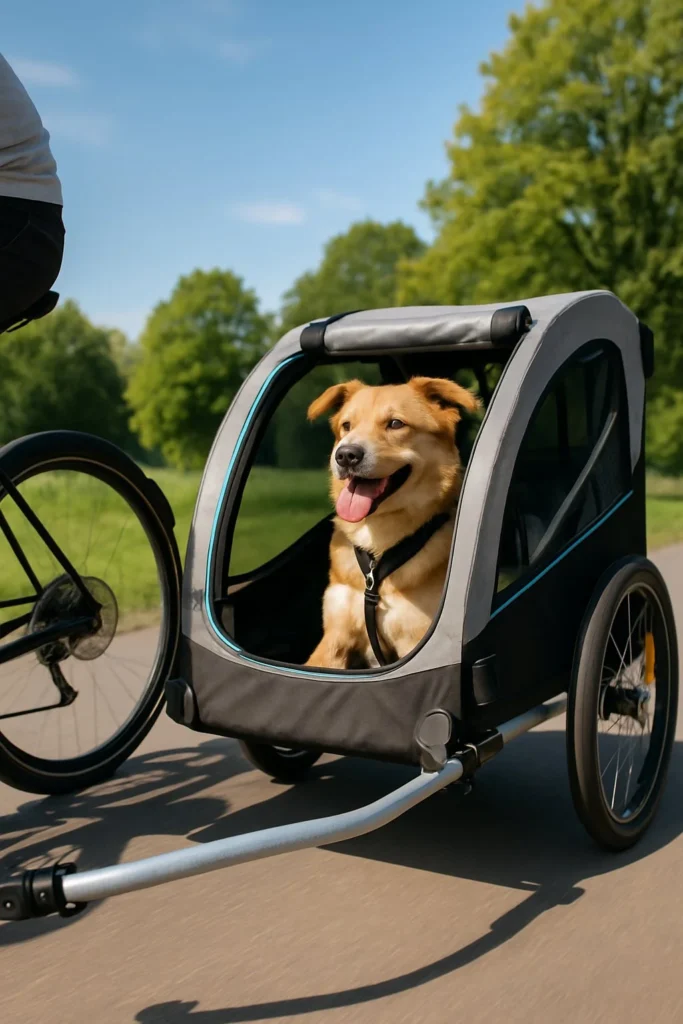
Yes, you can put a dog in a bike trailer if the dog fits, is healthy, and is trained to ride calmly.
Across the United States, more riders now take their dogs along on neighborhood streets, rail trails, and park paths. A pet bike trailer is a common way to do it. It is a small wheeled carrier that hitches to the rear of an adult bicycle and tows the dog behind you. Many U.S. models are rated in pounds, so check the weight label before you buy.
This guide is based on a review of general manufacturer guidance and widely shared veterinary safety advice. We did not run hands-on ride tests for this article. The answer depends on your dog’s size, health, and temperament, the trailer’s design, and your local rules. Check your state and city rules for bicycles and pets before you ride, and ask your veterinarian if your dog has any health concerns.
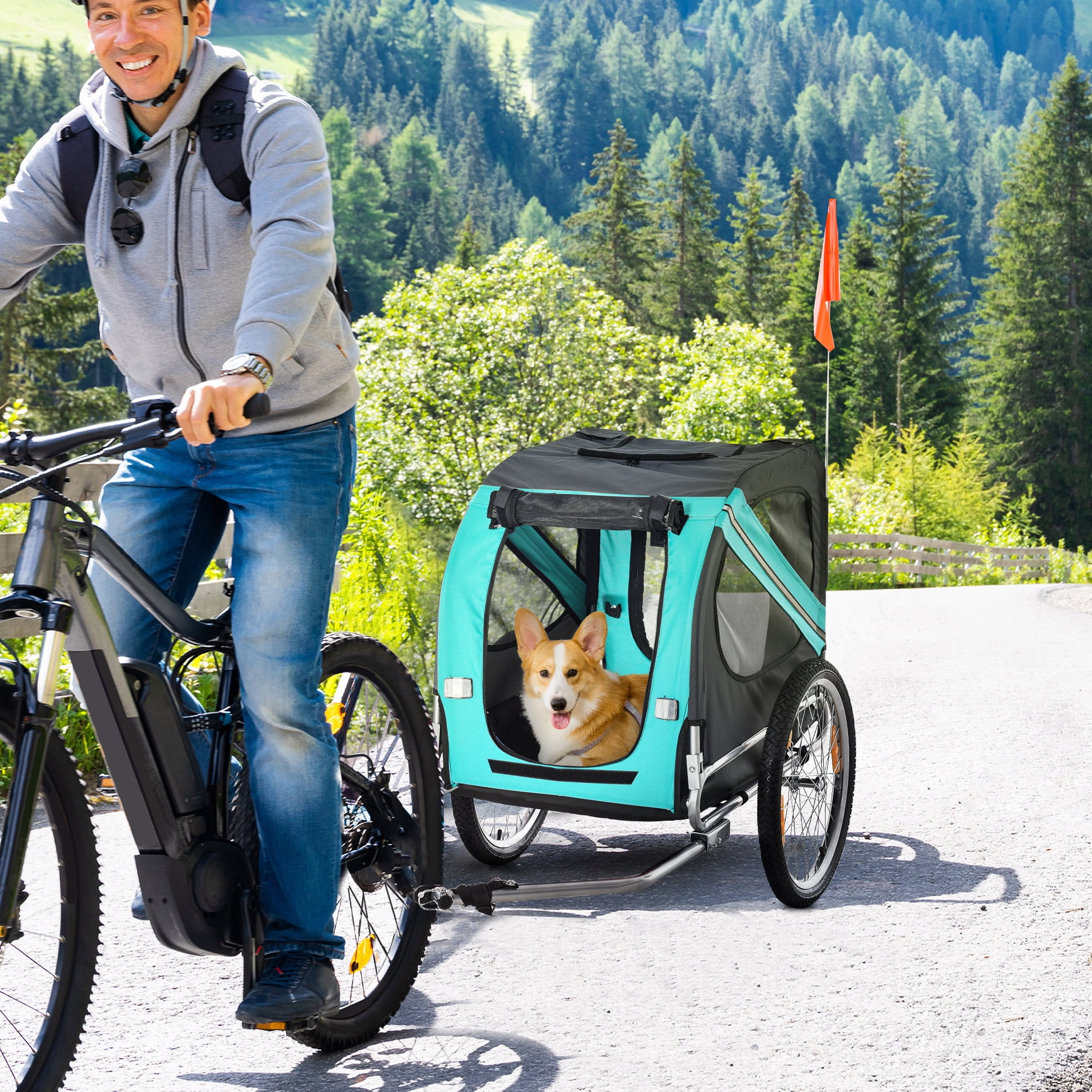
Source: walmart.com
What Is a Dog Bike Trailer and How Does It Work?
A dog bike trailer is a small cart with two wheels, a frame, a fabric or mesh body, and a hitch arm. The arm attaches to the rear axle or seat post of your bicycle. As you pedal, the trailer follows behind. Your dog sits or lies inside a protected space.
This is different from a front basket or a rear rack carrier. Those suit very small dogs and sit on the bike itself. A trailer carries the weight low and between its own wheels, which helps balance. That is why trailers are the usual choice for medium and large dogs.
You may also see pet trailers that convert into strollers. These have a swivel front wheel and a handle. They are handy if your dog tires out mid-trip, or if you want to walk through a park where bikes are not allowed. Always read the manual to learn which mode is approved for which use.
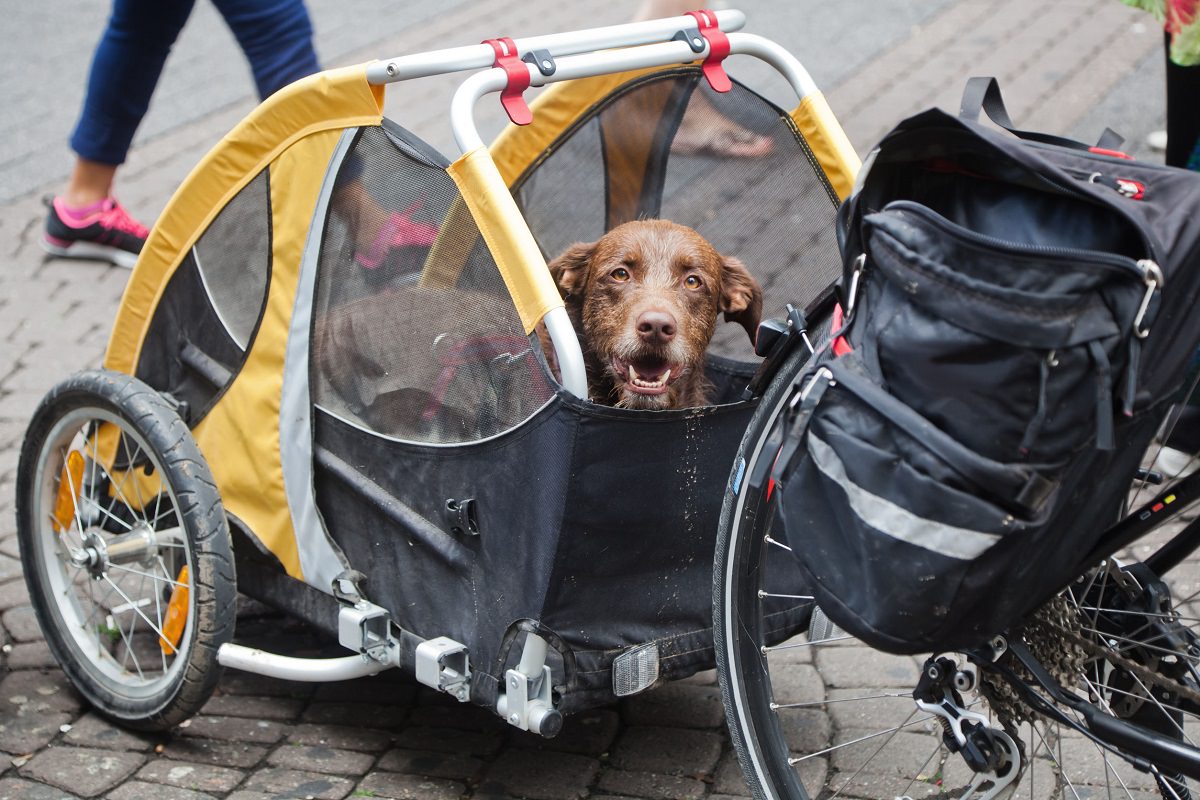
Source: doglifedailyhq.com
Hitch arm
Connects the trailer to the bike. Most use a quick-release coupler, but fit varies by bike frame and axle type.
Frame
Usually steel or aluminum. Steel can be heavier but sturdy. Aluminum is lighter.
Cabin
A fabric and mesh enclosure with windows for airflow and a door for loading.
Tether
A short leash inside the trailer that clips to your dog’s harness, never the collar.
Is Your Dog a Good Fit for a Bike Trailer?
Fit comes down to three checks: size, health, and temperament. If your dog fails one, wait or choose another way to exercise together. A trailer is not a good solution for every dog, and that is fine.
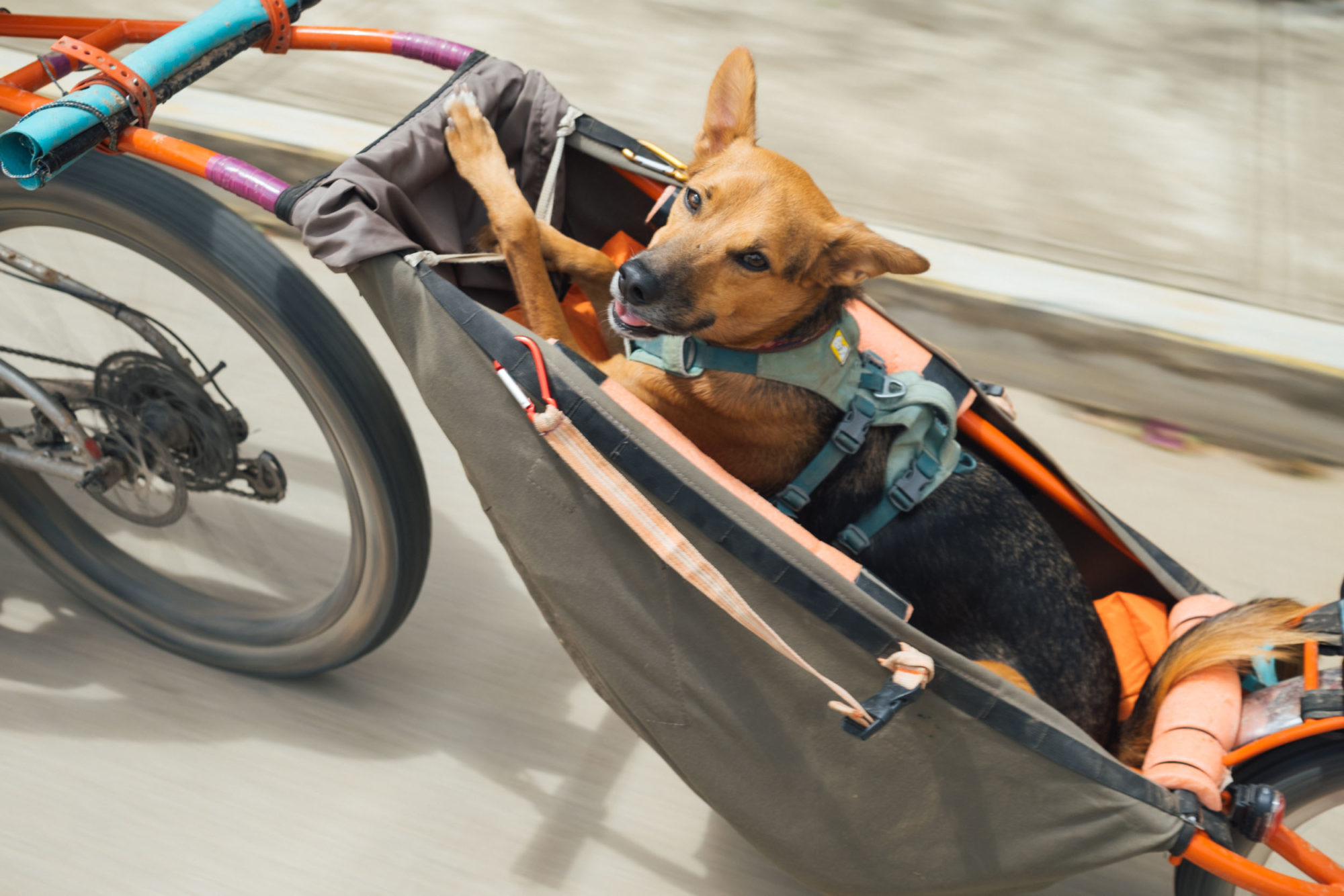
Source: icebike.org
Check Size and Weight First
Every trailer lists a maximum load in pounds and often an interior length and height. Many pet models list limits from roughly 40 to 100 pounds, but the number on your specific trailer is the only one that counts. Your dog should be able to sit up, turn, and lie down without touching the roof or walls.
Also check your bike. Look in the bicycle manual or ask a shop about the maximum weight it can safely tow. The trailer’s own weight counts too. A hypothetical example: a 25-pound trailer plus a 50-pound dog means 75 pounds of towed load. That figure should fit within both limits.
Consider Age and Health
Puppies are still growing, and their joints and vaccinations are works in progress. Senior dogs may have arthritis or heart conditions. Dogs with breathing difficulties, such as bulldogs and pugs, overheat faster than most breeds. Veterinary groups such as the American Veterinary Medical Association warn that heat stroke is a real danger for dogs in warm conditions.
Ask your veterinarian before the first ride if your dog is very young, older, overweight, or has a medical condition. This is general information and not medical advice for your individual pet.
Think About Temperament
A dog that panics in cars or hates being confined may not enjoy a trailer. Dogs that chase bikes, squirrels, or other dogs can also be a problem. A calm dog that settles in a crate is usually the best candidate.
Watch for signs of stress. Heavy panting when it is not hot, lip licking, trembling, whining, and trying to jump out all mean the dog needs a slower approach or a different activity.
How to Choose a Safe Dog Bike Trailer
Pick a trailer built for pets, not a child trailer used as a stand-in, unless the manual allows it. Child trailers may lack tether points and may have different ventilation. Look at weight rating, floor stability, hitch type, and visibility. Price is only one factor, and a lower price does not mean a safer choice.
Prices vary by brand and season, so check current listings at retailers you trust. Remember that manufacturer claims describe design intent. They are not independent proof of real-world safety.
Source: usblog.ibiyaya.com
Weight and size rating
Match your dog’s weight and length to the labeled limits, with room to spare.
Ventilation
Mesh panels on several sides help airflow. Sun shades and rain covers help in changing weather.
Interior tether
Use a short tether attached to a harness. It stops jumping without choking risk.
Padded, non-slip floor
A firm base with a washable pad keeps the dog steady and comfortable.
Reflectors and flag
Reflectors, lights, and a bright safety flag help drivers see you in traffic.
Wheel size and suspension
Larger wheels roll more smoothly over cracks and gravel. Suspension can reduce bumps, but it is optional.
Secure latches
Zippers alone can fail. Look for doors with a second lock or clip.
Folding design
Helpful for storage in apartments and car trunks. Check how fast it sets up.
How to Train Your Dog to Ride in a Bike Trailer
Training works best when it is slow and positive. Think of it as teaching a new room, not a new ride. Your dog should learn that the trailer is a safe, pleasant place before the wheels ever move.
Before you start, you need the assembled trailer, a harness that fits, treats, water, and a quiet area. Set aside several short sessions over days or weeks. The right pace is the one your dog can handle. Signs of success include a loose body, soft eyes, and a dog that walks in on its own.
Source: healthy-happy-dogs.com
Step 1: Let the dog explore
Place the trailer in your living room or yard with the door open. Leave treats and a favorite blanket inside.
Step 2: Practice entering and settling
Ask your dog to step in, sit, and lie down. Reward calm behavior. Do this until the dog hops in willingly.
Step 3: Close the door
Shut the door for a few seconds, then reopen and reward. Build up the time slowly.
Step 4: Add gentle movement
Walk and pull the trailer by hand on flat ground. Keep sessions short and watch your dog’s body language.
Step 5: Hitch to the bike
Attach the trailer to the bike and roll a few yards at walking speed. Stop often, and reward your dog.
Step 6: Take a short ride
Pick a quiet path with no cars. Ride at a slow, steady pace and turn gently. Increase distance over several outings.
What to Do If Your Dog Refuses
If the dog will not enter the trailer, go back a step. Feed meals near it, or place treats at the door. If the dog panics when the door closes, leave it open longer. If the dog still struggles after several weeks, talk to a certified dog trainer or your veterinarian. Some dogs simply prefer walking beside the bike or other activities.
Riding Safety, Heat, and U.S. Legal Basics
A loaded trailer changes how your bike behaves. It is longer, it takes more distance to stop, and it needs wider turns. Start in an empty lot or a quiet path. Many manufacturers suggest moderate speeds, so follow your manual’s guidance.
Rules for bicycles, trailers, and animals vary by state, county, and city. Some trails have their own rules, and some parks limit bikes or pets. No single national rule covers every situation, so check your local transportation department, park authority, or city code before riding. Wear a helmet and follow the same traffic laws as any cyclist.
Source: bikeforgeeks.com
Avoid heat
Ride in the cooler parts of the day. Hot pavement can burn paws, and a trailer can trap warm air. Never leave your dog in a parked trailer.
Carry water
Offer water at every stop and watch for heavy panting, drooling, or weakness. These can be warning signs of overheating.
Use a harness, not a collar
A properly fitted harness reduces neck strain if your dog shifts or you brake suddenly.
Check the hitch every ride
Look at the coupler, safety strap, and wheels before leaving. Loose parts are a common cause of trouble.
Plan breaks
Stop every so often to let your dog stretch, drink, and relieve itself.
Common Mistakes to Avoid
The most frequent error is skipping training and going straight to a long ride. Another is using a trailer that is too small, which leaves the dog cramped. Riders also forget to account for the trailer’s own weight. A fourth mistake is riding on rough surfaces too fast, which can jolt the dog and stress the hitch.
If your dog shows distress, stop right away. Open the trailer, offer water, and let it rest in the shade. If you see signs of heat stroke or injury, contact a veterinarian immediately.
Frequently Asked Questions
Q
What size dog can ride in a bike trailer?
It depends on the trailer. Many pet trailers are rated for dogs from small to large, with limits often listed between about 40 and 100 pounds. Your dog should be able to sit, turn, and lie down comfortably. Always follow the label on your specific trailer.
Q
Can a puppy ride in a bike trailer?
Ask your veterinarian first. Young puppies may not have completed vaccinations, and their joints are still developing. Many owners wait until the dog is older and cleared by a vet. Short, slow introductions to the trailer at home are generally a gentler way to start.
Q
How fast can I ride with a dog in a bike trailer?
Keep speeds moderate and follow your manual. A loaded trailer needs more stopping distance, so avoid fast descents and sharp turns. If your dog looks stressed or the trailer shakes, slow down or stop.
Q
Should my dog wear a harness in the trailer?
Yes, in most cases. A harness spreads force across the chest, which is gentler than a collar if the dog shifts or you brake hard. Clip the tether to the harness, and keep it short enough to stop jumping but long enough to let your dog lie down.
Q
Can I use a child bike trailer for my dog?
Only if the manufacturer says it is allowed. Child trailers are designed and rated for children, and may lack a tether point or the right ventilation for a dog. Dog claws can also damage the fabric. A trailer made for pets is usually the safer choice.
✦ Wrapping Up
Conclusion
So, can you put a dog in a bike trailer? Yes, when the dog fits the trailer, is healthy enough to ride, and has been trained to relax inside. The best results come from a pet-rated trailer, a fitted harness, slow training, and careful attention to heat and traffic.
No trailer suits every dog or every rider. If your dog is a puppy, a senior, a flat-faced breed, or easily frightened, talk with your veterinarian first. Check local rules where you ride, and follow the manual for both your trailer and your bike.
💡 Key Takeaway
This week, measure your dog, weigh your dog, and compare both numbers with a trailer’s size and weight limits. Then place the trailer in your home and let your dog explore it with treats before any ride.